By Dr. Ola J. Friday
The Early Educator Investment Collaborative (The Collaborative) directs our resources to the undervalued early educator workforce, supporting the stability of families and communities and expanding opportunity for our youngest children. We partner with a range of organizations in order to transform the ways in which we support the development, preparation, and – very importantly – compensation of early childhood education professionals. We’re proud of the results we’ve helped to realize, and every success fires our ambitions.
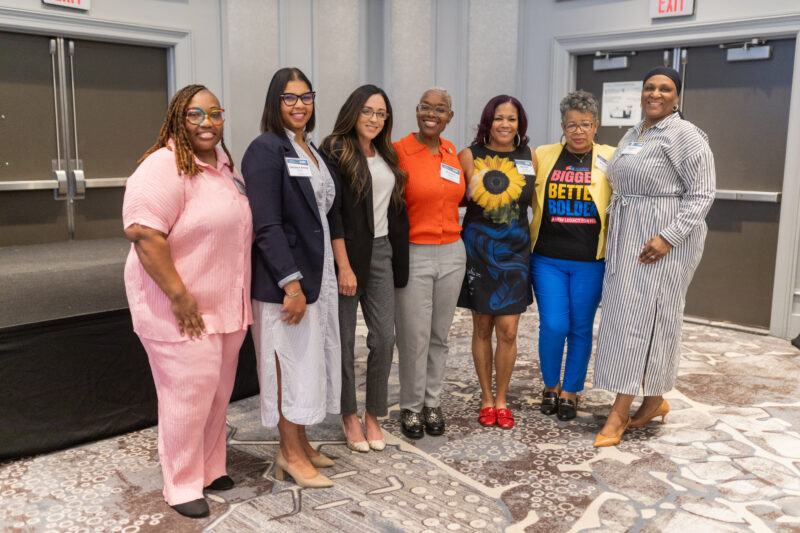
Last month, we realized one longtime ambition, gathering in New Orleans for the Worth More: Advancing ECE Compensation Summit. Held in partnership with the Center for the Study of Child Care Employment at University of California, Berkeley, the event convened 75 participants from 11 states and the District of Columbia. CSCCE has been the steady ally in our $11.4 million Compensation Capacity-Building grant and the facilitator of its community of practice, which includes Colorado, D.C., Texas, Minnesota, and Louisiana, along with Illinois, which participates without The Collaborative’s funding.


Personally, one of the many highlights of the summit was hearing from Libbie Sonnier, CEO of the Louisiana Policy Institute for Children, who said:
Every state in this room ultimately is wrestling with the same question. Do we value early educators enough to build a system that proves it? Meaningful investment, predictable investment, sustainable investment. That is the work. And I’m grateful that we all get to do that together, because our babies and the people who care and educate them deserve better.
These words align with The Collaborative’s focus on the workforce and the potential for reliable public and private investments to support systems change. New Orleans, Louisiana — a city and state that have made tremendous progress toward better compensating educators — provided fertile ground for collaboration. Undaunted by the heat and occasional downpour, attendees compared notes on strategies for financing compensation, elevating educator voice, using data, and more. Informal conversations were just as stimulating, with advocates and professionals building connections that will continue to fortify the many state and local efforts underway at a moment when public financing for early childhood can feel like an elusive goal.
We will be sharing videos, stories, and insights from the summit in the coming months, but for now, I want to reflect on what we mean when we talk about investing in early educators.
- Let the lives and voices of the educators be our guide. Professionalizing the early childhood field can boost compensation and reduce turnover, but it is important to remember that this approach often involves asking these professionals to “invest in themselves” when they are already overwhelmed. Strategies such as competency-based bachelor’s degrees, paid release time, and wraparound supports help professionals to climb the career ladder and lead to a more stable and experienced workforce. The educators at the summit emphasized that they are eager to invest in themselves when they are able to reap the returns of that investment.
- Trust the real experts. Our grantee partners know their respective states and communities. As grantmakers, we don’t tell them what to do with grant money. We view our role as building their capacity, connecting them to one another, learning alongside them, and then elevating lessons that can benefit the field more broadly. Bringing advocates together from different states allows them to conspire and to build solidarity and momentum.
- Value what matters most. As grantmakers, we sometimes subscribe to an overly simplified notion of “return on investment” that purports to track the return of every dollar granted, but we have found that the most important financing and policy progress happens at the complex and even messy intersection of philanthropy, politics, and culture. The Collaborative’s investments in systems change aren’t as easy to track, but we firmly believe they will have the most enduring impact.
Because we want better outcomes for kids, we believe in taking care of the adults who take care of them. Systems change takes time, and The Collaborative keeps this long view in mind while remaining ambitious about what’s possible. We are ready to follow the lead of the educators, advocates, and state partners already doing the work. The $WorthMore momentum belongs to them, and to the children they teach and care for.

Dr. Ola J. Friday is the inaugural Executive Director of The Early Educator Investment Collaborative (The Collaborative).